What’s on the form
- Your company block, including a line for your license number.
- Customer name, job address, phone and email.
- Nine line items with quantity, unit price and amount.
- Subtotal, sales tax and total.
- An acceptance block with a validity period and wording about conditions found after work starts.
Filling it in without losing money
A blank form will happily let you underprice a job. Three things catch most of it:
- Price the whole visit. Drive time, setup, hauling the old unit, cleanup and the conversation at the door are all hours the job takes from you.
- Write the exclusions down. Permits, code upgrades, and anything behind a finished wall. If it’s not written, the customer assumes it’s included.
- Put a date on the price. Thirty days is normal. Without it you are honoring last spring’s copper price.
When the paper form stops being enough
One form on a clipboard is fine. The trouble starts around the point where you’re writing them at nine at night, or where two techs are quoting the same job two different ways, or where you can’t remember which estimates are still waiting on an answer.
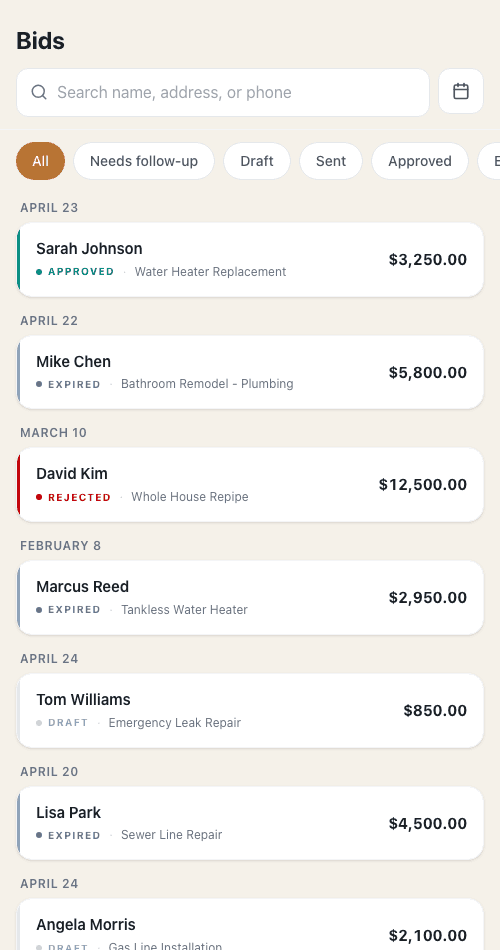
That’s the point to put your prices in a plumbing price book and let the app do the writing. You talk through the job, it prices it from your book, and the customer signs on their phone before you leave.
Either way, this form is yours. It costs nothing and there’s nothing to sign up for.